

Injection molding
For a tray, record the gate position and cavity. Measure flatness and stack fit after the agreed cooling interval, then check the marked electrical contacts.
Injection molding guidanceChoosing polypropylene for a handling tray or an extruded sheet? Start with the PP you use today, the shape you need to hold and the electrical test the finished part must pass.

Use the current PP grade, processing route and electrical requirement to narrow the search.
No confirmed grade is currently listed in this category.
Share your current PP resin code, processing route and finished-part acceptance criteria for a candidate review.
A tray that must stack flat and a sheet that will be formed later need different trial samples.
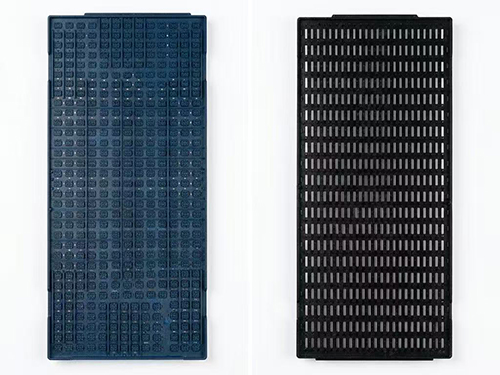
Identify the stacking surfaces, clips and pockets on the drawing. Specify where a technician can place the electrical contacts on a finished tray.
State the incoming sheet thickness and which surfaces are stretched during forming. Mark the corners and flat areas to check after forming.
Give the resin supplier and PP grade code, including whether it is a homopolymer or copolymer if known. Identify color, filler and any regrind used in your line.
Agree on the part or sheet that will be inspected before requesting a trial quantity.
For a tray, record the gate position and cavity. Measure flatness and stack fit after the agreed cooling interval, then check the marked electrical contacts.
Injection molding guidance
Send the sheet width, gauge and downstream forming steps. Mark samples from the center and both edges, with the machine direction identified.
Extrusion guidanceKeep specimens from the same lot and record what changed between runs.
Use the same datum and cooling interval for each cavity. Compare loaded and unloaded stack fit before attributing warpage to the resin.
Cavity ID, tray drawing, flatness readings and elapsed time.
Compare locations at measured thicknesses and the same test orientation. Check whether the blend or line settings changed during sampling.
Widthwise sampling map, thickness, lot and line log.
Compare the original sheet and the formed part at corresponding positions. Record local thickness and electrode contact on corners.
Marked sheet and insert, forming method and test conditions.
Share the exact PP grade in use, processing route and the required electrical test. Confirm a candidate and its processing window before a trial.
Current resin code, component dimensions and target metric with its unit.
Use the same inspection plan from sample request through parts review.
Identify the dimensions, stacking surfaces and electrical contacts that decide whether the part passes.
Confirm the candidate, batch identification, trial quantity and whether the sample will be molded, extruded or formed.
Repeat the agreed tests on the cooled tray or formed insert. Record cavity or sheet position with each reading.
Send the full resin code and the data sheet for the material currently on the line. If you already add color, filler, concentrate or regrind, include those details.
Use the plaque as a starting point. Specify the electrode locations, test method and conditioning for the actual tray and repeat the measurement on that geometry.
Share the exact PP grade, blending equipment and electrical target. Ask about carrier compatibility and a trial dosing basis for the proposed concentrate.
Keep the orientation marked from the sheet to the formed part. Compare local thickness, conditioning and the contact method at the same locations.
Tell us what you mold or extrude, which resin is on the line and what your customer will measure.
For a tray
Send pocket geometry, stacking surfaces, wall thickness and contact locations.
For sheet or formed parts
Include the sheet gauge, width, forming steps and inspection positions.